Esports Tournaments with the Largest Prize Pools in History
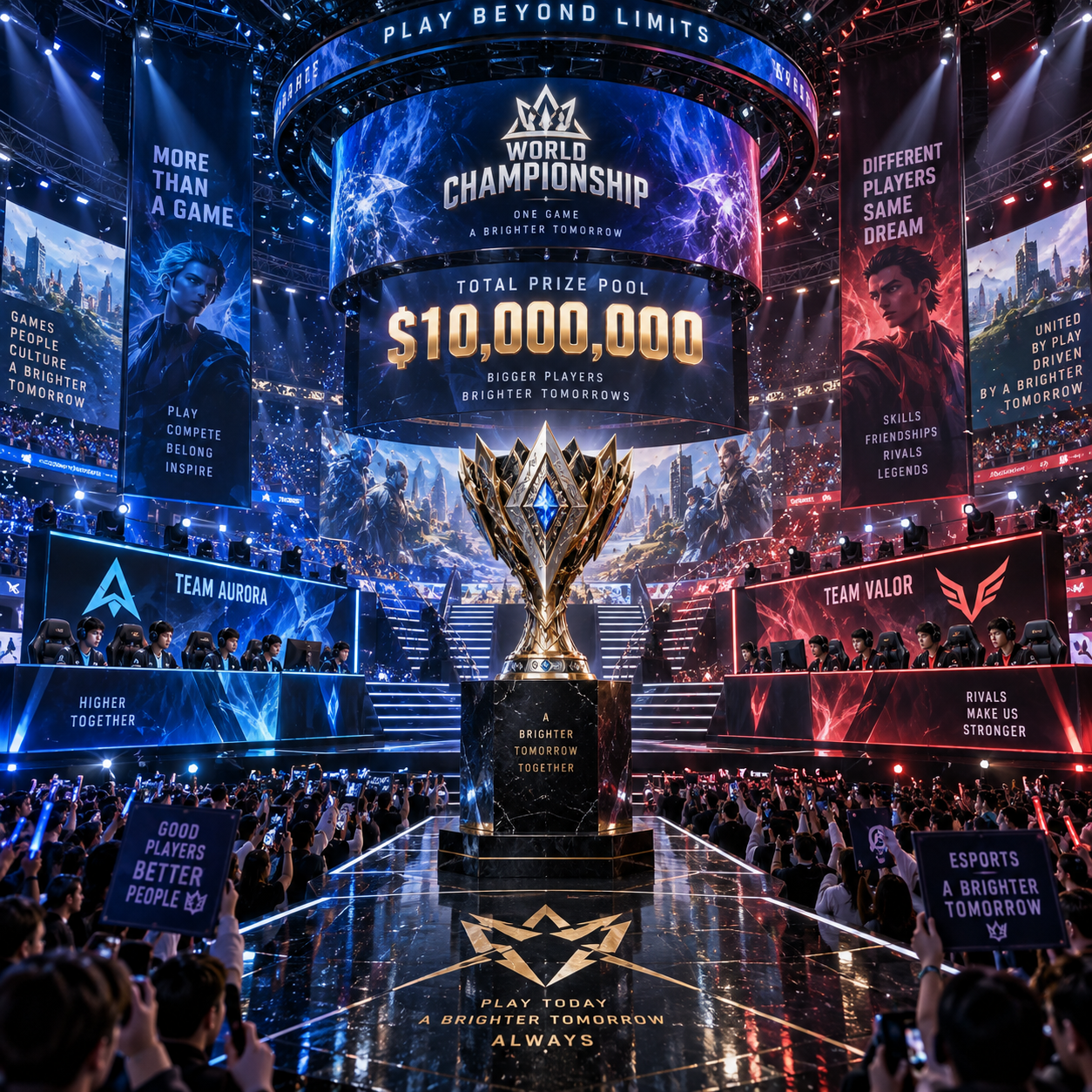
The largest esports prize pools have transformed competitive gaming from a niche spectacle into a global entertainment industry. Dota 2’s The International, the Fortnite World Cup, the Esports World Cup, and major events in League of Legends and PUBG all represent different approaches to funding and rewarding elite players.
Comparing these tournaments requires care. A headline figure may describe an announced pool, a guaranteed payout, a community-funded total, or money distributed across several competitions. The numbers below therefore emphasize historical significance and funding context rather than presenting every ranking as permanently definitive.
How Esports Prize Pools Are Measured
An esports prize pool is the total money allocated for tournament rewards, but the advertised figure does not always equal player earnings. Analysts should distinguish between guaranteed payouts, contributed funds, final distributions, and the amount received by an individual champion.
A useful comparison uses four terms:
- Guaranteed prize pool: the minimum amount promised by the organizer or publisher.
- Funded or announced pool: the total amount reported after sponsorship, ticket sales, crowdfunding, or in-game purchases are included.
- Distributed prize money: what the tournament actually awards after the competition concludes.
- Player payout: the money received by a player, team, or roster after the prize is divided and any applicable taxes or organizational agreements are considered.
Team size also changes the meaning of a record. A $20 million team tournament divided among five starters, substitutes, coaches, and an organization cannot be compared directly with a $3 million one-on-one competition. Fortnite’s solo championship and Dota 2’s team-based The International illustrate this difference clearly.
For official event rules and historical context, organizers’ published regulations are more reliable than social-media summaries. Public records such as the history of The International can help identify changes in format, although reported totals may vary by source.
The International and Dota 2’s Prize Pool Records
The International became synonymous with record esports prize pools because Dota 2 combined publisher funding with sustained community crowdfunding through in-game purchases. That model produced several of the largest single-tournament totals ever recorded.
Valve launched The International in 2011 with a $1.6 million prize pool, already a remarkable figure for a young esports event. The tournament’s funding model evolved when players could purchase the annual Battle Pass, later replaced by related compendium and in-game content systems. A portion of eligible sales increased the championship pool, turning the audience into a direct financial participant.
The approach reached its clearest peak in 2021, when The International 10 reported a prize pool of roughly $40 million. Team Spirit won the championship, with the title’s five-player roster taking the largest share of a distribution worth tens of millions of dollars. The total was not simply a sponsorship budget; it reflected months of community purchases connected to Dota 2.
This model had two major effects. First, it gave The International a powerful annual narrative: every new Battle Pass could threaten the previous record. Second, it linked player spending to competitive rewards in a way that made Dota 2’s esports economy unusually visible.
There was a trade-off. A crowdfunded record can create impressive publicity, but it also makes the prize pool dependent on player engagement and monetization strategy. Later changes to Valve’s Dota 2 ecosystem, including the reduction of the traditional Battle Pass model, showed that record growth is not guaranteed every year. The size of one International should not be treated as proof that every part of the Dota 2 competitive scene receives equivalent financial support.
Fortnite World Cup and the Rise of Massive Single-Event Payouts
The Fortnite World Cup made esports prize money a mainstream story by combining a huge guaranteed budget with a highly visible solo championship. Its 2019 finals in New York featured a total prize pool of approximately $30 million across the event.
The most famous payout went to Kyle “Bugha” Giersdorf, who won the solo competition and received $3 million. That figure was extraordinary because it went to one teenager in one event rather than being divided across a long league season. Epic Games also allocated substantial rewards to duos and other finalists, giving the tournament broad financial reach.
Fortnite’s contribution to prize-pool history was partly about scale and partly about presentation. The game had a vast casual audience, recognizable creators, and a publisher willing to fund a global competition directly. The result connected esports with the wider Fortnite entertainment ecosystem, including streaming, social media, and celebrity culture.
The event also demonstrates why single-event payouts deserve separate treatment. A champion’s earnings can become a cultural headline even when the total tournament pool is smaller than a multi-stage team championship. At the same time, a one-off publisher-funded event may not establish a permanent annual financial structure. Fortnite’s 2019 World Cup was historic, but its record cannot automatically be extrapolated to every later Fortnite season.
Other Esports Tournaments That Reached Historic Prize Pools
Other major esports tournaments have approached or exceeded multi-million-dollar benchmarks through publisher investment, crowdfunding, or multi-title event budgets. Their figures are best compared by event type rather than by a single universal ranking.
| Tournament | Game or games | Year | Reported prize pool | Funding context |
|---|---|---|---|---|
| The International 10 | Dota 2 | 2021 | About $40 million | Community purchases plus publisher-supported event structure |
| Fortnite World Cup Finals | Fortnite | 2019 | About $30 million | Primarily publisher-funded |
| The International 9 | Dota 2 | 2019 | About $34 million | Battle Pass-related crowdfunding |
| Esports World Cup | Multiple titles | 2024 | More than $60 million announced | Central funding, club rewards, and event-wide allocations |
| PUBG Global Championship | PUBG | 2021 | Reported in the multi-million-dollar range | Publisher support and event-specific contributions |
The Esports World Cup requires especially careful interpretation. Its headline budget covers more than one championship: individual game tournaments, club rewards, player awards, and other program components. It is therefore not a direct like-for-like comparison with The International or the Fortnite World Cup.
The League of Legends World Championship usually has a lower headline prize pool than Dota 2’s largest International totals, yet it remains one of the most prestigious esports events in history. Riot Games has historically emphasized a structured global circuit, regional leagues, media rights, and long-term competitive stability. PUBG Global Championship events have used different formats and funding approaches, sometimes incorporating in-game item sales. The result is a useful reminder that prize-pool size is only one measure of an esport’s commercial strength.
What Determines the Size of an Esports Prize Pool?
Prize pools grow when publishers, sponsors, audiences, and commercial partners combine enough revenue to justify large payouts. No single funding source explains every record.
Publisher investment and crowdfunding
Publishers can guarantee a large budget to attract players and viewers, as Epic Games did for the Fortnite World Cup. Dota 2 used a different route by allowing eligible in-game purchases to increase The International’s pool. Crowdfunding creates a visible connection between fans and competition, but it can also make annual totals volatile.
Sponsorships, tickets, and media exposure
Brand partnerships, ticket sales, broadcast agreements, merchandise, and licensing contribute to the wider event economy. They do not always flow directly into the prize pool. A tournament may generate substantial revenue while keeping player payouts moderate in order to finance production, venues, staff, and future competitions.
Game maturity and competitive structure
A mature game with a global audience can support multiple regional leagues and international events. That may produce more total annual prize money than one record-breaking final. League of Legends is a strong example: its importance comes from a connected ecosystem, not simply the size of the World Championship payout.
Comparing Prize Pools Across Games and Eras
Fair comparisons require adjustments for inflation, event format, team size, funding source, and the number of competitions held each year. A raw dollar ranking is a useful starting point, not a complete analysis.
Inflation affects older figures, although esports grew so quickly that audience expansion and publisher budgets often mattered more than consumer-price changes. Currency conversion can also alter rankings when sources report euros, pounds, or local currencies at different exchange rates.
Format matters just as much. Compare these questions before calling one event more lucrative:
- Was the tournament a solo, duo, or team competition?
- Did the advertised total cover one event or an entire festival?
- How many players and organizations shared the money?
- Was the pool guaranteed, crowdfunded, or partially distributed through bonuses?
- Did the season include several comparable international events?
A practical metric is payout concentration: the champion’s share divided by the total prize pool. Fortnite’s solo winner received an unusually prominent individual reward, while team-based events distribute value across players and staff. Another useful measure is annual circuit value, which adds major events across a season instead of focusing on one final.
Do the Largest Prize Pools Make a Tournament the Most Important?
The largest prize pool does not automatically identify the most important esports tournament. Prestige also depends on viewership, competitive depth, longevity, global reach, player participation, and cultural impact.
The International has extraordinary financial history and a distinctive fan-funded identity. The Fortnite World Cup became a landmark because it introduced enormous player payouts to a mass audience. The League of Legends World Championship carries sustained prestige through a decade-plus competitive tradition, regional qualification, and a highly recognizable global final. The Esports World Cup represents a newer multi-title strategy that treats esports as a broad international sports property.
Prize money still matters. It can help players turn competition into a profession, encourage organizations to recruit talent, and persuade publishers to invest in production quality. Yet a large payout can conceal weaknesses if it appears only once, benefits very few participants, or depends on an unstable monetization campaign.
The strongest assessment combines three lenses: money for direct economic impact, competition for sporting credibility, and reach for audience and cultural influence. That framework explains why a tournament with a smaller pool may remain more important to an esport than a short-lived financial record.
Frequently Asked Questions
Which esports tournament had the largest prize pool in history?
The International 10 in Dota 2 is widely cited among the largest single-game esports tournaments, with a reported pool of about $40 million in 2021. Multi-title events such as the Esports World Cup have announced larger overall budgets, but those totals cover several competitions and award categories.
How are esports tournament prize pools funded?
Funding can come from publisher guarantees, sponsorships, ticket sales, media rights, merchandise, and crowdfunding linked to in-game purchases. The mix differs by game and event.
Which game has awarded the most esports prize money?
Dota 2 is frequently identified as the leading game by cumulative recorded esports prize money, largely because of The International and its crowdfunding model. Rankings can change as databases update historical events and include different competition categories.
Do players receive the entire advertised prize pool?
The advertised pool is intended for eligible competitors, but each player does not receive the entire amount. Money is divided by placement, team structure, roster agreements, taxes, and sometimes organizational terms.
Are esports prize pools still increasing?
Some events continue to post very large budgets, especially multi-title competitions and publisher-backed championships. Growth is uneven, however. Changes in game monetization, sponsorship markets, and audience behavior mean that record prize pools are not guaranteed every year.