Traditional Sports vs. Esports Training: How Do the Regimens Really Compare?
Ask most people whether a professional League of Legends player trains as hard as an NFL linebacker, and you'll get a skeptical look. That skepticism is understandable — and mostly wrong. The gap between esports training and traditional sports preparation has been narrowing for years, and in some dimensions, the overlap is striking. This article breaks down what each type of athlete actually does, day to day, and where the real differences lie.
What Does a Typical Training Day Look Like?
Both traditional athletes and esports competitors structure their days around deliberate practice, review sessions, and recovery — though the physical environments look very different.
A professional soccer or basketball player typically starts with a morning conditioning session (strength work, cardio, mobility), moves into skill drills or team practice for several hours, then reviews game footage in the afternoon. Total structured time: six to eight hours, depending on the season.
A pro gamer's day follows a surprisingly similar rhythm. Most esports athletes on organized rosters practice eight to twelve hours daily — individual mechanics in the morning, team scrimmages in the afternoon, and replay analysis in the evening. Organizations like T1 or Cloud9 run structured schedules with mandatory wake times, meals, and coaching check-ins. The setting is a gaming house or team facility; the discipline required is the same.
The biggest surface-level difference is physical exertion. But as we'll see, that gap is smaller than the stereotype suggests.
Physical Demands: More Similar Than You'd Think
Esports athletes do engage in physical conditioning — not at the same intensity as traditional sports athletes, but far more than most people assume.
Elite pro gamers average 300 to 400 mouse clicks and keyboard inputs per minute during high-intensity play. That's a real ergonomic load on wrists, forearms, and the upper back. Teams like those competing in the League of Legends Championship Series have employed physiotherapists specifically to address repetitive strain injuries — the same category of injury that affects tennis players and baseball pitchers.
Injury prevention has become a core part of esports training. Wrist stretches, posture correction, eye strain management, and grip strength exercises are standard in professional gaming organizations. Some teams have adopted yoga and light resistance training not for aesthetics, but to extend career longevity.
Traditional sports athletes still carry the heavier physical burden — there's no equivalent to a 90-minute full-contact practice in competitive gaming. But the idea that esports requires zero physical preparation is a myth that professional organizations have long since abandoned.
Mental Training and Sports Psychology
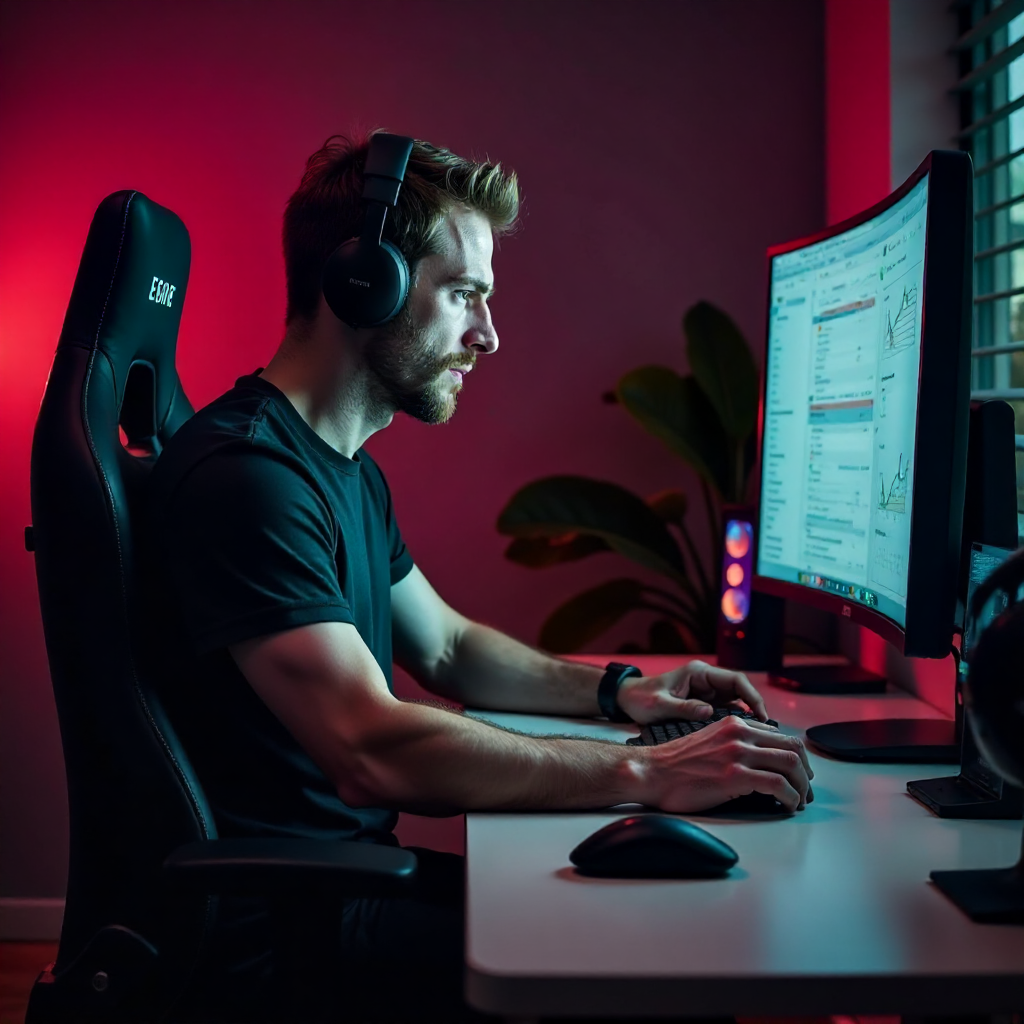
This is where the two worlds converge most clearly. Both traditional athletes and esports competitors rely heavily on sports psychology and structured mental coaching.
Focus drills, visualization, pressure simulation, and tilt management (the gamer's term for emotional regulation under stress) are practiced by both groups. NBA teams have employed sports psychologists for decades. Now, organizations like Team Liquid and Fnatic do the same for their rosters, with mental coaches running sessions on composure during high-stakes moments.
The mental demands of competitive gaming are genuinely intense. A single misplay in a tournament match can end a team's season. That pressure — combined with public scrutiny, streaming culture, and the speed of online criticism — creates a psychological environment that requires real coping infrastructure. Traditional athletes face comparable pressure in playoffs and championships, and they've developed decades of institutional knowledge around managing it.
What esports is doing now is importing that knowledge. Reaction time training, decision-making under fatigue, and communication under pressure are skills that apply equally to a point guard running a fast break and a support player calling rotations in Valorant.
Skill Development: Repetition, Analysis, and Strategy
Deliberate practice sits at the core of both training models — the difference is in what gets repeated and how performance gets analyzed.
Traditional athletes drill specific movements until they become automatic: free throw mechanics, passing routes, serve technique. Esports athletes do the same with mechanical skills — last-hitting in MOBAs, aim training in shooters, combo execution in fighting games. Both groups spend significant time on activities that feel tedious precisely because mastery requires it.
Replay analysis is where the parallels become almost identical. Football coaches have used film rooms for generations. Esports coaches use replay tools built into games like Dota 2 or CS2 to break down positioning errors, decision timing, and opponent tendencies. The analytical process is structurally the same: watch what happened, identify the mistake, drill the correction.
Team strategy sessions also mirror each other closely. A basketball team's film session and a competitive Overwatch team's draft preparation meeting serve the same function — building shared mental models of how to execute under pressure against a specific opponent.
Recovery, Nutrition, and Sleep
Recovery protocols in esports are catching up to traditional sports, though the field is younger and institutional knowledge is still being built.
Traditional sports organizations have refined nutrition and sleep science over decades. Athletes follow periodized diets, hydration schedules, and sleep protocols designed around training loads and competition calendars. The science is well-established and deeply embedded in team culture.
Esports organizations are adopting similar frameworks, though implementation varies widely. Top-tier teams now employ nutritionists and enforce sleep schedules — recognizing that cognitive performance degrades sharply with poor sleep, and that gaming at a professional level is cognitively demanding work. Reaction time, decision speed, and pattern recognition all suffer measurably after poor rest.
The honest gap: many esports athletes, especially younger or independent players, still operate without any formal recovery structure. Late-night ranked grinding, irregular meals, and caffeine dependency remain common outside organized team environments. Traditional sports have largely solved this problem at the professional level; esports is still working through it.
Coaching Structures and Performance Support
At the highest levels, both disciplines now deploy multi-layered coaching and support staffs — though the roles have different histories.
A major traditional sports franchise might employ a head coach, position coaches, a strength and conditioning staff, athletic trainers, a nutritionist, a sports psychologist, and a video coordinator. These roles evolved over many decades of competitive professionalization.
Top esports organizations have built comparable structures remarkably quickly. A competitive League of Legends roster might have a head coach, assistant coaches, an analyst team reviewing opponent data, a mental performance coach, and a team manager handling logistics. Performance analysis tools — many built into the games themselves — give esports analysts data granularity that traditional sports scouts spend significant resources trying to replicate.
The convergence here reflects a broader trend: as esports prize pools and media rights deals have grown, organizations have invested in the infrastructure that produces consistent results. The model they've copied is traditional sports.
Burnout, Career Longevity, and the Human Cost
Both types of athletes face burnout — but the timelines and causes differ in ways that matter.
Traditional athletes often have careers measured in decades, though physical wear eventually ends them. A professional tennis player might compete into their mid-30s; an NFL lineman's body may give out much earlier. The limiting factor is almost always physical.
Esports careers tend to be shorter, and the limiting factor is cognitive and emotional. Most pro gamers peak in their early-to-mid 20s. Reaction time begins to decline slightly after that — a meaningful disadvantage at the highest levels of competition. More significantly, the grind of ten-plus hour practice days, constant public scrutiny, and the pressure of performance creates burnout that ends careers before physical decline does.
The industry is beginning to reckon with this. Player unions, mental health resources, and more sustainable practice schedules are emerging conversations in esports governance. Traditional sports took generations to develop athlete welfare infrastructure; esports is trying to compress that timeline.
Frequently Asked Questions
Is esports training as hard as traditional sports training?
In terms of time commitment, mental discipline, and structured preparation, professional esports training is genuinely rigorous. The physical intensity is lower, but the cognitive demands and practice hours are comparable to many traditional sports at the professional level.
How many hours a day do pro esports players practice?
Most professional esports athletes on organized rosters practice between eight and twelve hours daily, including individual skill work, team scrimmages, and replay analysis sessions.
Do esports athletes need to be physically fit?
Physical fitness isn't required to compete, but it helps. Organized esports teams incorporate exercise routines, stretching, and ergonomic training primarily to prevent repetitive strain injuries and maintain energy levels during long practice sessions.
What mental skills are most important in competitive gaming?
Focus under pressure, emotional regulation (avoiding tilt), fast decision-making, and clear team communication are the most critical mental skills. Sports psychology tools like visualization and breathing techniques are increasingly used to develop them.
Can training methods from traditional sports improve esports performance?
Yes — and many esports organizations are already applying them. Sleep science, nutrition planning, mental coaching, and structured recovery protocols all transfer directly from traditional sports and have measurable benefits for competitive gaming performance.