How to Get Started with Esports: A Beginner’s Guide
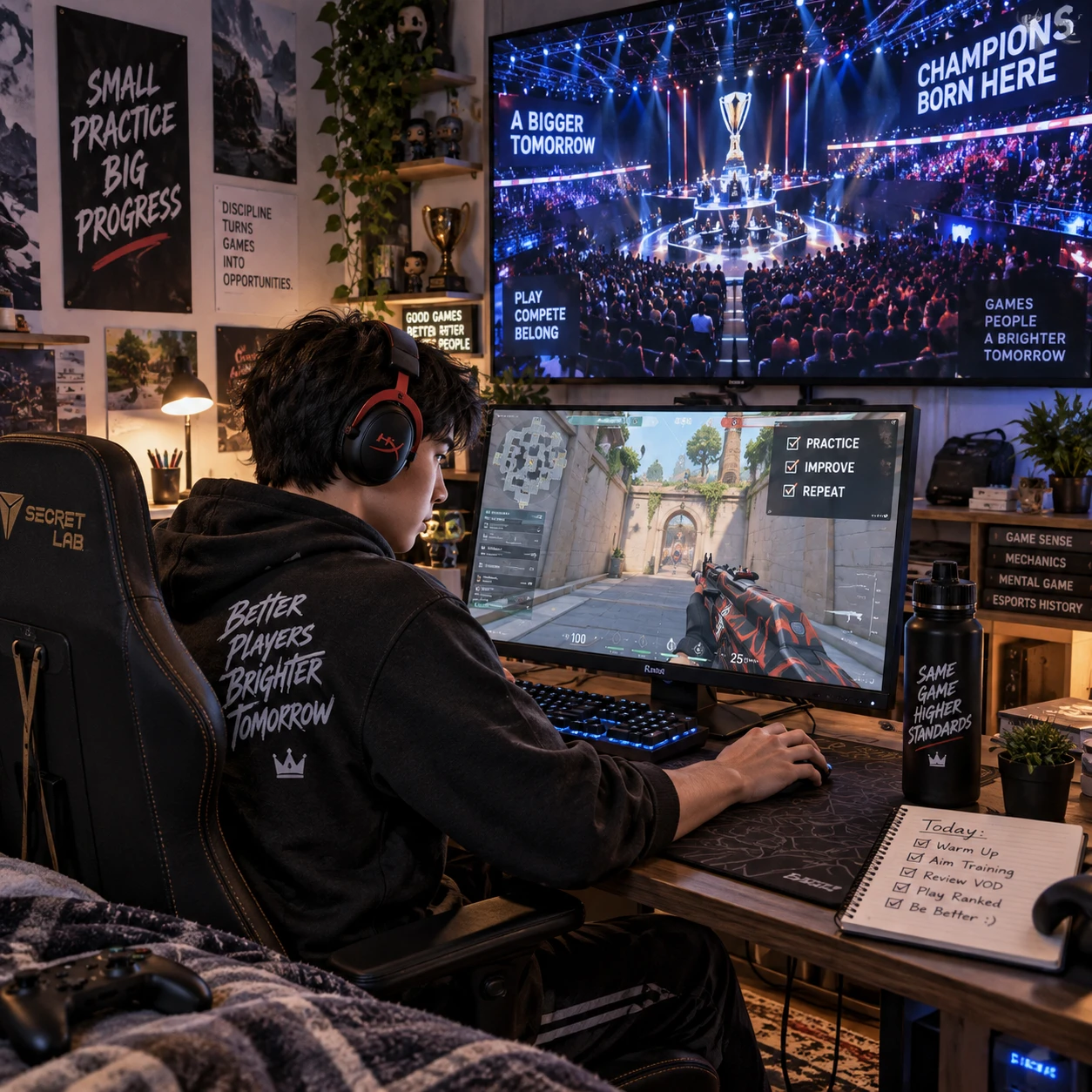
Esports can start with a ranked match after school, a local tournament, or simply watching a team compete. You do not need expensive equipment or a professional contract to take part. The key is to choose a game you enjoy, learn its competitive format, and make steady progress at a pace that suits your life.
This guide covers the first steps for players and fans alike: choosing a game, setting up your PC or console, building a practice routine, finding a community, and exploring esports careers. Competitive gaming has room for many kinds of participants, and playing professionally is only one possible destination.
What Esports Is and How It Works
Esports is organized competitive gaming, where individuals or teams play video games under agreed rules and formats. Competitions range from casual online brackets to professional leagues watched by large audiences.
Each game has its own competitive structure. A fighting game tournament may use a knockout bracket, while a multiplayer online battle arena (MOBA) league often features teams playing a season of matches before playoffs. First-person shooter (FPS) competitions can include group stages and elimination rounds. Sports games, strategy titles, and battle royales have their own rules for scoring, rosters, and qualification.
Players are the most visible participants, but teams also rely on coaches, analysts, managers, and support staff. In team games, players divide responsibilities and use voice or text communication to coordinate decisions. Solo competitors still work with coaches or practice partners, and must manage their own preparation.
As a fan, you can follow a league, learn its teams and formats, and watch a match with a better sense of what is at stake. As a player, your first goal is simpler: understand the rules and competitive mode of one game before trying to follow every esport at once.
Choose a Game That Fits You
Choose an esports game by weighing the genre, your interests, the device you own, and the game’s active competitive scene. A game you enjoy returning to is usually a better starting point than one chosen only for its prize money or popularity.
Start by thinking about how you like to play. If quick reactions and aim appeal to you, consider an FPS. If you enjoy planning with teammates, a MOBA or team-based shooter may fit. Fighting games reward matchup knowledge and precision, while strategy games emphasize decision-making and resource management. Sports titles and racing games can suit fans who already follow real-world competition or enjoy head-to-head play.
Before committing, check a few practical details:
- Access: Is the game free or affordable, and does it run on your current PC or console?
- Competitive format: Does it offer ranked play, regular tournaments, or a clear route for new competitors?
- Community: Can you find beginner guides, active discussion groups, and players at your skill level?
- Personal fit: Do you enjoy the core gameplay even when you lose?
Try the tutorial and a few unranked matches before buying add-ons or investing heavily. A popular title may have a large audience but also a steep learning curve. A smaller scene can offer a more approachable community, though it may provide fewer events.
Set Up Your Gaming Basics
You can get started in esports with a PC or console that runs your chosen game reliably, a stable internet connection, and comfortable controls. High-end hardware can help in some competitive settings, but it is not a requirement for learning or joining beginner events.
Use the device you already own if it handles the game well. On PC, check the game’s minimum and recommended system requirements; on console, confirm that the title supports online play and the relevant competitive modes. A wired internet connection can reduce interruptions when available, but a stable Wi-Fi connection may be enough. Use a headset or speakers that let you hear important game cues, and choose a controller, mouse, and keyboard that feel comfortable.
Adjust basic settings before chasing specialist gear. Set controls you can use consistently, make text and interface elements easy to read, and choose graphics settings that keep performance steady. If your game allows sensitivity changes, adjust them gradually rather than copying a professional player’s setup. Their settings reflect their habits and equipment, not a universal advantage.
Spend in order of need: first ensure the game runs properly, then improve comfort or solve a specific problem. A costly mouse or high-refresh-rate monitor can be a worthwhile upgrade for some players, but it will not replace game knowledge, practice, or communication. Avoid buying equipment on the promise that it will guarantee a higher rank.
Build Skills Through Deliberate Practice
Build esports skills by practicing a small number of fundamentals, setting achievable goals, and reviewing what happens in your matches. A focused routine usually teaches more than playing for hours without a plan.
Begin with the basics for your genre: aim and positioning in an FPS, character matchups in a fighting game, map awareness and decision-making in a MOBA, or timing and consistency in a sports title. Learn the game’s maps, rules, common strategies, and roles. In team games, practice clear communication: share relevant information, listen to teammates, and keep callouts brief.
A beginner routine might take 45 to 90 minutes, three or four days a week, depending on your schedule. You could spend 10 minutes warming up, 25 to 50 minutes on matches or a specific drill, then a few minutes reviewing one decision you would change. This is a flexible example, not a required training dose. Shorten it if school, work, or fatigue makes a longer session difficult.
Set goals you can control, such as learning two map callouts or improving a particular skill, rather than demanding a rank increase by a deadline. After a match, note one mistake and one thing you handled well. Reviewing your own gameplay can reveal repeated habits, but do not turn every loss into a long analysis session. Rest matters: stop when focus drops, and balance screen time with sleep and other activities.
Join the Community and Find Competition
Join a game’s community through official channels, local gaming groups, or well-moderated online spaces, then use ranked play and beginner events to gain experience. Community participation helps you learn the game and find teammates, but choose spaces that treat new players respectfully.
Look for official game forums, developer or publisher event pages, community Discord servers, and local esports clubs. Read the rules before posting or joining a voice channel. Keep personal information private, follow community standards, and leave groups where harassment is ignored. If you are under 18, involve a trusted adult before attending an in-person event or sharing personal details online.
Ranked modes provide a structured way to test your skills against players at a similar level. Treat your rank as feedback, not a verdict on your potential. When you feel comfortable with the rules and controls, search for online community tournaments, school or university leagues, gaming cafés, and local events. Check entry requirements, age limits, platform rules, schedules, and whether a team or solo entry is allowed.
For a first event, choose one with clear rules and a beginner-friendly format. You might enter with a friend, join a community team, or watch a local competition before playing. In team events, agree on roles and communication expectations beforehand. A small tournament can teach you how competition feels without requiring a major commitment.
Explore Paths Beyond Playing
Esports careers include coaching, analysis, broadcasting, event operations, and content creation, as well as playing on a team. You can participate in the scene without reaching professional player level.
Coaches help players or teams prepare, communicate, and review strategy. Analysts study match footage, tactics, and opponent tendencies. Broadcasters and commentators explain action for viewers, while event operations staff coordinate schedules, equipment, venues, and competition logistics. Content creators make videos, streams, interviews, or educational material for a specific game or audience.
These roles call for different skills. Analysis benefits from careful observation and clear explanations; broadcasting relies on presentation and preparation; event work requires organization and calm problem-solving. A practical way to explore is to volunteer with a local event, create a short match breakdown, or help a community team organize practice. Build examples of your work before assuming that an interest will become a paid job.
Esports employment can be competitive and may depend on location, experience, and a changing games industry. Treat early projects as a way to learn and meet people, not as a guaranteed route to a full-time role. If a task involves paid work, clarify responsibilities, hours, and compensation in advance.
Make a Sustainable Start
A sustainable esports start fits around your health, responsibilities, budget, and enjoyment of the game. Set limits on practice and spending, and judge progress over months rather than expecting rapid results.
Try this simple first-month plan:
- Week 1: Pick one game, learn its rules, and complete its tutorial or beginner training.
- Week 2: Choose a few fundamentals to practice and play unranked matches while learning the controls.
- Week 3: Try ranked play if you feel ready, review a small sample of matches, and join a community space.
- Week 4: Watch a tournament or enter a low-pressure event, then decide what you want to work on next.
Keep a modest budget and avoid borrowing money for gear or paid coaching. Take breaks, protect sleep, and stop if gaming is interfering with school, work, relationships, or wellbeing. Progress is rarely a straight line: learning a new role or game can lower your rank temporarily, and different games reward different skills.
You can also follow esports as a fan, help organize events, or create analysis and content. Choose a next step that feels manageable, then reassess after a few weeks. That approach leaves room to improve without making a hobby or career goal depend on constant play.
Frequently Asked Questions
Do I need an expensive PC to start playing esports?
No. Start with a PC or console that runs your chosen game reliably. Upgrade only when you can identify a specific limitation, such as unstable performance or uncomfortable controls.
How much should a beginner practice?
There is no universal requirement. A few focused sessions each week can help you build habits; adjust the length to your schedule, concentration, and wellbeing.
Can I get into esports without becoming a professional player?
Yes. You can compete casually, follow tournaments, join a community team, or explore coaching, analysis, broadcasting, event operations, and content creation.
How do I find beginner-friendly tournaments?
Check official game event pages, community groups, local gaming organizations, and school or university clubs. Read the rules, entry requirements, and schedule before signing up.